
Geo-Fencing Statistics: What Marketers Should Know
Geo-Fencing statistics help marketers understand where location-based advertising is growing, what it can realistically measure, and how to use location data responsibly.
Writer: Luis Reyes
Date: July 28, 2026
Geo-Fencing is a cornerstone of modern location-based marketing, but the data behind it tells a more powerful story than market growth alone. For advertisers, Geo-Fencing statistics help answer critical questions: How accurate is the technology? What can we measure? And how are we shaping the future of Geo-Fencing as privacy expectations evolve?
The short answer is that Geo-Fencing remains a powerful marketing tool, especially for advertisers trying to connect digital campaigns to real-world behavior. But its value depends on how well marketers use Geo-Fencing analytics, respect location data privacy, and connect Geo-Fencing campaigns to a broader Unified Media strategy.
Turn Location Data Into Measurable Campaign Performance
Discover how Simpli.fi connects Geo-Fencing to a true Unified Media activation, foot traffic measurement, and privacy-first location data practices.
Talk to a Geo-Fencing Expert
KEY TAKEAWAYS
- Rapid Adoption: Geo-Fencing is expanding as more businesses leverage mobile signals and behavioral data to fuel marketing and customer engagement.
- Unmatched Precision: While industry accuracy depends on signal type and environment, we prioritize granular data to ensure virtual boundaries translate into reliable performance.
- Advanced Analytics: Our Geo-Fencing analytics enable you to evaluate store visits, audience behavior, and market-level performance through precise offline attribution.
- Privacy-First Approach: We lead with responsible data practices, ensuring location-based targeting is built on consent and high ethical standards.
- Unified Media Impact: Geo-Fencing delivers the best results when unified with Native, Display, Video, and Connected TV Advertising (CTV).
WHAT GEO-FENCING STATISTICS SAY ABOUT THE MARKET TODAY
Industry research points to continued growth for the Geo-Fencing market, though exact projections vary by research firm. Grand View Research estimated the global Geo-Fencing market at $2.37 billion in 2023 and projected it to reach $9.36 billion by 2030, growing at a 21.7% compound annual growth rate from 2024 to 2030.
Market Research Future uses a different forecast window and market estimate. Its 2026 report valued the Geo-Fencing market at $6.4 billion in 2024 and projected growth from $7.03 billion in 2025 to $18.01 billion by 2035, with a 9.86% CAGR during the 2025–2035 forecast period.
For marketers, the takeaway is not that one projection is “the” correct number. It is that multiple market reports point in the same general direction: businesses are investing more in location technology, location-based services, mobile engagement, and real-world measurement.
That growth is being shaped by a few likely factors:
- More consumers rely on mobile devices throughout the buying journey
- Advertisers want to connect digital media spend to physical store visits
- Multi-location brands need market-level and location-level performance insights
- Retail, travel, entertainment, restaurants, healthcare, logistics, and other sectors are using Geo-Fencing for different forms of targeting, measurement, and operational visibility
HOW COMMON IS GEO-FENCING IN MARKETING?
Geo-Fencing is common across location-based marketing strategies, especially for businesses that depend on physical visits, local market behavior, or real-world audience movement. Retailers, quick-service restaurants, automotive brands, entertainment venues, healthcare organizations, tourism brands, and multi-location advertisers can all use Geo-Fencing to reach people based on where they are or where they have recently been.
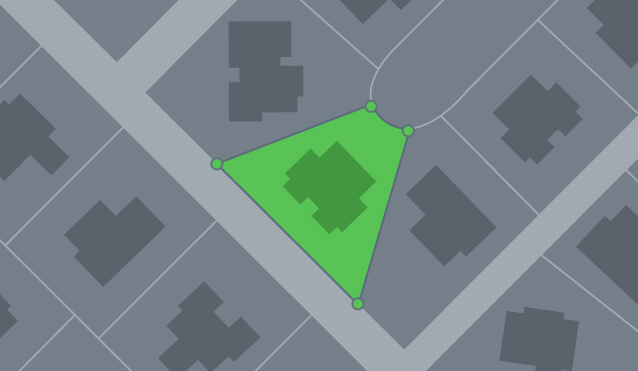
In advertising, Geo-Fencing is often used to create virtual boundaries around specific locations, such as stores, events, competitor locations, campuses, neighborhoods, or trade show venues. When a mobile device enters or exits that boundary, the advertiser can use that location signal to inform audience targeting, ad delivery, or measurement.
For marketers, this makes Geo-Fencing useful in campaigns where physical context matters. A restaurant group may want to reach nearby diners. A retailer may want to understand store visit patterns. A brand activating around an event may want to reach attendees within a defined area. A multi-location advertiser may want to compare performance across markets.
WHAT GEO-FENCING ANALYTICS CAN TELL MARKETERS
Geo-Fencing analytics help marketers move beyond “who was near this location?” and answer more useful campaign questions.
Strong Geo-Fencing analytics can help advertisers understand:
- How many people were reached within a defined geographic area
- Which locations or markets drove stronger engagement
- Whether campaign exposure correlated with physical visits
- How foot traffic changed during or after a campaign
- Which creative, audience, or channel combinations supported stronger performance
- How customer behavior differs across stores, regions, or events
This matters because Geo-Fencing is not only a targeting tactic. It can also support measurement. For advertisers with physical locations, foot traffic insights can help connect campaign activity to real-world behaviors like store visits, event attendance, or movement within a defined market. That makes it easier to evaluate whether location-based campaigns are supporting the actions they were designed to influence.
HOW EFFECTIVE IS GEO-FENCING?
Geo-Fencing can be effective when the campaign is built around a clear business goal. It is usually strongest when advertisers are trying to influence or measure real-world action, such as store visits, event attendance, dealership visits, restaurant traffic, or local market engagement.
The effectiveness of Geo-Fencing depends on several factors:
- The quality of the location data
- The precision of the geofence
- The relevance of the audience
- The timing of the message
- The offer or creative
- The campaign’s channel mix
- The measurement model used to evaluate performance
A better way to frame effectiveness is saying Geo-Fencing gives marketers a way to align media delivery with real-world context. That can make campaigns more relevant and measurable, but only when the strategy is built around reliable data, meaningful locations, and a clear attribution plan.
HOW ACCURATE IS GEO-FENCING?
Geo-Fencing accuracy varies. It depends on the location signal, the device, app permissions, operating system settings, density of nearby buildings, GPS availability, Wi-Fi and cellular signals, and the way the platform builds the geofence.
In practical terms, Geo-Fencing is not always a perfect “point on a map.” Accuracy can be stronger in open outdoor areas and less reliable in dense urban environments, indoor locations, multi-story buildings, or places where GPS signals are limited. The size and shape of the geofence also matters. A small fence around a storefront may require more precision than a larger fence around an event venue, shopping district, or campus.
Marketers should think about Geo-Fencing accuracy in context:
| Factor | Why It Matters |
|---|---|
| Fence size | Smaller fences require more precise location signals. |
| Physical environment | Tall buildings, indoor spaces, and dense urban areas can affect signal quality. |
| Device settings | Users may limit location sharing or app permissions. |
| Data source | GPS, Wi-Fi, cellular, and other signals can produce different levels of accuracy. |
| Platform methodology | Different Geo-Fencing solutions may build, validate, and report location data differently. |
The goal is to understand how location data is sourced, how fences are created, how visits are counted, and how campaign performance is measured.
GEO-FENCING MARKET TRENDS MARKETERS SHOULD WATCH
Geo-Fencing market trends are being shaped by more than adoption alone. As advertisers use location data across more channels and touchpoints, the biggest shifts are happening around measurement, privacy, omnichannel planning, and market-level insights.
1. Location-Based Marketing Is Becoming More Measurement-Focused
Marketers are under more pressure to connect advertising spend to business outcomes. For brands with physical locations, that often means looking beyond clicks and impressions to understand store visits, foot traffic lift, and local market performance.
Marketers should not just ask whether a campaign reached people in a target area, but also ask what happened after exposure, how visits were measured, and whether the data is strong enough to guide campaign decisions.
2. Privacy Expectations Are Reshaping Location Data Use
Location data can be sensitive. It can reveal patterns about where people live, work, shop, receive care, worship, or spend time. Because of that, marketers need to treat Geo-Fencing as both a targeting opportunity and a data responsibility.
FTC actions show how closely regulators are watching sensitive location data. In December 2024, the FTC alleged that Gravy Analytics and Venntel unfairly sold sensitive consumer location data and collected or used location data without verifiable user consent. In May 2026, the FTC announced that Kochava and a subsidiary would be prohibited from selling, sharing, or disclosing sensitive location data without consumers’ affirmative express consent as part of a settlement.
For advertisers, the practical takeaway is clear: Geo-Fencing should be built around permission-based, responsible data practices. Strong campaigns do not need invasive targeting. They need clear audience logic, appropriate location choices, privacy-aware measurement, and partners that understand the compliance risks tied to location data.
3. Geo-Fencing Is Becoming Part of Unified Media Planning
Geo-Fencing is often discussed as a mobile tactic, but it can support a wider Unified Media strategy. A user’s real-world location behavior can inform how advertisers plan display, video, native, CTV, mobile, and cross-device campaigns.
That matters for marketers because location context is rarely the entire strategy. It is one signal that can help advertisers build smarter audience segments, tailor creative, sequence messaging, and measure physical-world outcomes.
When Geo-Fencing is connected to a Unified Media strategy, marketers can use location-based insights to support broader campaign planning instead of treating Geo-Fencing as a one-off activation.
4. Multi-Location Advertisers Need Location-Level Insight
For franchise, retail, multi-location, healthcare, and service brands, Geo-Fencing can help marketers understand how performance differs by market or location. A campaign may perform well overall but still show meaningful differences across stores, regions, or audience segments.
This is where Geo-Fencing analytics become especially useful. Marketers can evaluate which locations are driving visits, which markets may need different creative, and which audience behaviors signal higher intent.
For multi-location brands, this can support more efficient budget allocation. Instead of treating every market the same, advertisers can use location data to find where campaign strategy needs to shift.
WHAT TO LOOK FOR IN GEO-FENCING SOLUTIONS WITH ADVANCED ANALYTICS
Geo-Fencing statistics can help marketers understand broader market trends, but campaign decisions should come from the quality of the data, the clarity of the measurement, and the strategy behind the activation. The best Geo-Fencing solutions with advanced analytics should help marketers plan, activate, measure, and optimize campaigns, not just draw a boundary around a location.
Marketers should look for Geo-Fencing capabilities that support:
- Custom geofence creation around relevant real-world locations
- Campaign activation across multiple programmatic channels
- Foot traffic and visit-based measurement
- Store-level or location-level reporting
- Audience insights based on real-world behavior
- Transparent location data practices
- Privacy-aware targeting and measurement
- Optimization based on campaign performance, not just impressions or clicks
For advertisers comparing platforms, the question should be “Can this solution help us make better decisions before, during, and after the campaign?”
HOW SIMPLI.FI SUPPORTS GEO-FENCING CAMPAIGNS
At Simpli.fi, we help advertisers use Geo-Fencing as part of a broader Programmatic Media strategy. Instead of treating Geo-Fencing as a standalone tactic, we connect location-based targeting with media activation, foot traffic measurement, and Unified Media campaign planning.
Advertisers can use our Geo-Fencing capabilities to reach audiences around relevant real-world locations, then extend that strategy across channels like display, video, native, mobile, and CTV. This helps marketers engage audiences based on location context while still evaluating performance across the larger media mix.
See how Simpli.fi’s Geo-Fencing solutions can help you connect location-based targeting to real-world campaign performance.
For brands with physical locations, foot traffic measurement can help show how campaigns influence store visits and offline behavior. That makes Geo-Fencing especially valuable for retailers, restaurants, franchises, event marketers, and multi-location brands that need to connect digital advertising to real-world outcomes.
Ready to get started? Contact the Simpli.fi team at hi@simpli.fi to speak with an expert, and follow us on social media for the latest advertising insights and product updates.
 | Luis Reyes
Sr. Manager of Content Marketing | Simpli.fi Luis Reyes is a dynamic leader in content marketing, recognized for strategically elevating brand presence and driving impactful results. As the Senior Manager of Content Marketing at Simpli.fi, he leverages extensive expertise gained from previous roles, including Senior Client Success Manager for national advertising agencies and enterprise clients, Marketing Content Creator at a leading healthcare services provider, focusing on brand mergers and project management, and Sales Account Manager at a prominent digital marketing firm, where he secured and managed national and regional digital marketing campaigns along with creative work. His diverse experience and forward-focused approach solidify his status as an authority in today’s competitive marketing landscape. |
FAQ: Geo-Fencing Statistics
Geo-Fencing statistics are data points that help marketers understand the growth, adoption, accuracy, use cases, and performance potential of Geo-Fencing. These may include market size projections, industry adoption trends, accuracy benchmarks, foot traffic metrics, campaign engagement data, or location-based marketing insights.
Geo-Fencing is common in industries that rely on location-based engagement or physical visits, including retail, restaurants, automotive, entertainment, travel, healthcare, logistics, and multi-location marketing. It is often used to reach users near specific stores, events, competitor locations, or service areas.
Geo-Fencing is legal in many marketing contexts, but it must be used responsibly. Advertisers need to follow applicable privacy laws, consent requirements, platform policies, and restrictions around sensitive location data. Marketers should be especially careful with locations tied to health, religion, children, private residences, or other sensitive categories.
Geo-Fencing analytics are the insights marketers use to evaluate Geo-Fencing campaign performance. These can include audience reach, impressions, engagement, store visits, foot traffic lift, location-level performance, market-level trends, and offline attribution data.