
Advertising In The 2026 Winter Olympics: How Brands Are Redefining Sports Marketing At Scale
How advertisers are using data, local relevance, and omnichannel strategies to win attention during the world’s biggest sports moment
Writer: Luis Reyes
Date: February 3, 2026

Whether it’s Shaun White carving through New York City’s Central Park as reported by NBC News, or fans planning watch times for their favorite Winter Olympic events from the Opening Ceremony to the final medals,Winter Olympics fever is already setting in, and the world’s attention is building toward Milano Cortina 2026.
Events such as the 2026 Winter Olympics represent more than a global sporting event. They mark a defining shift in modern sports marketing. As viewership fragments across streaming platforms, devices, and markets, brands can no longer rely on broad reach alone. Winning in 2026 requires precision, relevance, and the ability to scale performance across every screen and every market.
For advertisers, this moment isn’t just about showing up with streaming ads during a marquee sports event. It’s about rethinking how sports marketing works in an era where attention is earned locally, measured digitally, and optimized continuously.
HOW SPORTS MARKETING HAS CHANGED FOR TENTPOLE EVENTS LIKE THE 2026 WINTER OLYMPICS
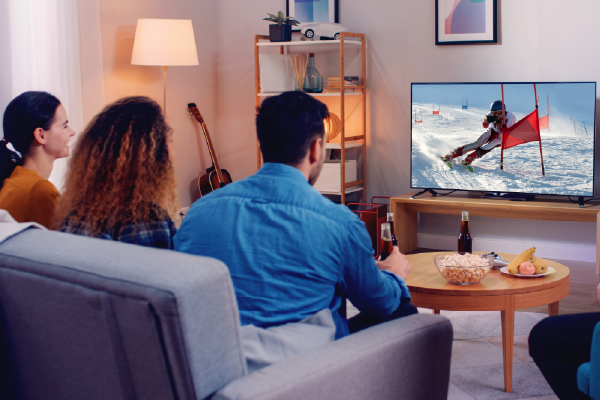
Not long ago, primetime sports marketing was dominated by the biggest budgets and the broadest reach. Linear TV placements and national sponsorships defined success. Many of us reminisce on iconic Winter Olympics moments whether it was a breakout performance on the slopes, a surprise medal run, or a figure skating routine that captured our imagination for days. The advertising playbook was simple: show up during one of those moments and capture attention.
That model no longer reflects how audiences watch primetime moments today.
Today’s viewing experience for events such as the Winter Games looks very different:
- Audiences engage with events like the Winter Games across streaming platforms, connected TVs, mobile devices, and social feeds, often switching between screens in real time
- Live broadcasts are just one touchpoint, with viewers also engaging through highlights, clips, replays, and second-screen experiences throughout the day
- Messaging is increasingly expected to reflect where viewers are located, what they’re watching, and how they’re watching, even during global events like the 2026 Winter Olympics in Italy
- Primetime is no longer a single moment; it’s a distributed, multi-screen experience that unfolds across platforms and time zones
For media buyers, this reframes what it means to win. Success in 2026 isn’t about being the loudest brand during primetime coverage. It’s about being the most precise, reaching the right audiences in the right markets, across the right screens, and optimizing performance as attention shifts.
In short, the brands that stand out during events such as the 2026 Winter Olympics won’t be the ones buying the biggest placements. They’ll be the ones buying with precision and context.
THE RISE OF ADDRESSABLE SPORTS ADVERTISING
One of the most significant shifts shaping sports marketing in 2026 is the move toward detailed geo-location targeting through technologies such as addressable advertising. Instead of buying ads based solely on fixed programming or time slots, brands are increasingly aligning messaging with real-world signals such as location, behavior, and intent.
This shift allows advertisers to:
- Tailor messaging by region, market, or ZIP code
- Align national brand moments with local relevance
- Reduce wasted impressions while improving performance efficiency
For global sports moments such as the Winter Games, this level of detailed targeting helps bridge the gap between national scale and local impact. A single campaign can maintain brand consistency while adapting creative, timing, and delivery at the local level.
STREAMING IS NO LONGER AN OPTION FOR SPORTS MARKETING – IT’S THE NEW PLAYBOOK
Connected TV and streaming are no longer complementary or optional advertising channels. They are now core to how sports audiences consume content, particularly around live events and related highlights and commentary that are delivered through streaming-first environments.
Take a familiar scenario: when a standout sports moment happens, most viewers aren’t turning on a TV, flipping to a specific channel, and waiting for a replay. They’re opening a streaming app, pulling up a clip, or watching highlights online within seconds. That behavior isn’t a one-off situation; it reflects how audiences increasingly experience sports moments today.
For brands advertising around events like the 2026 Winter Olympics, this shift introduces clear advantages:
- Household-level targeting instead of broad, generalized audiences
- Cross-device measurement that connects exposure to downstream action
- Performance visibility tied to outcomes—not just impressions
Streaming-first sports consumption has changed both where attention happens and how quickly it moves. For advertisers, that makes CTV and streaming not just premium environments but essential ones.
LOCAL RELEVANCE IS THE NEW DIFFERENTIATOR
Global sports moments create shared emotion, but relevance is still personal. A brand advertising in New York City may need a very different message than one running streaming TV ads in the Chicago area even if both are aligned to the same national moment. Local context matters.
Brands that align messaging with factors such as regional interests, nearby locations, or market-specific offers tend to create stronger, more meaningful connections with audiences.
In practice, this means:
- Activating campaigns by market, rather than treating audiences as a single group
- Adjusting creative to reflect local realities and needs
- Measuring performance at the market level, then scaling what works
This local-first approach doesn’t dilute brand equity—it strengthens it. When audiences feel seen and understood, brands shift from transactional reach to earned loyalty.
MEASURING WHAT MATTERS IN 2026
Modern sports marketing isn’t just about visibility, it’s about outcomes. As brands expand into more location-based targeting, activate against multiple audience segments, operate across thousands of regions, and manage increasingly scrutinized budgets, the demand for clear, trustworthy performance signals has never been higher.
In short: when strategies get more complex, reporting must rise to the challenge.
This is where working with a performance-driven partner matters. With transparency built into every layer of reporting, advertisers gain direct visibility into where ads ran, who they reached, how audiences engaged, and what actions followed, in real time. That level of clarity allows brands to move beyond assumptions and make confident, data-backed decisions throughout a live event.
The most effective sports-adjacent strategies in 2026 are built around:
- Cross-channel measurement that connects exposure to meaningful action across devices and environments
- Online and offline attribution tied to real consumer behavior, not modeled guesswork
- Continuous optimization during the event itself—not after the final whistle
When performance is fully visible, optimization becomes proactive instead of reactive. Budgets can shift as audience behavior shifts. Creative can evolve as engagement patterns emerge. And results can be measured in outcomes, not just impressions.
Sports moments may be fixed on the calendar, but performance shouldn’t be static. In 2026, the brands that win are the ones that treat measurement as a strategic advantage, not a post-campaign report.
WHAT THIS MEANS FOR BRANDS MOVING FORWARD
Events such as the 2026 Winter Olympics offer a snapshot of where sports marketing is headed, not a one-off opportunity. They reflect a broader shift toward strategies that balance scale with precision, storytelling with data, and national moments with local relevance.
Brands that succeed won’t treat prime time events as a standalone media buy. They’ll approach moments like these as part of an integrated, omnichannel strategy designed to meet audiences wherever and however they’re watching.
Because in 2026, winning attention isn’t about being everywhere. It’s about being relevant where and when it matters most.
Want to start a conversation about advertising around primetime events? Connect with us on LinkedIn or reach out at hi@simpli.fi we’re happy to talk strategy.
 | Luis Reyes
Sr. Manager of Content Marketing | Simpli.fi Luis Reyes is a dynamic leader in content marketing, recognized for strategically elevating brand presence and driving impactful results. As the Senior Manager of Content Marketing at Simpli.fi, he leverages extensive expertise gained from previous roles, including Senior Client Success Manager for national advertising agencies and enterprise clients, Marketing Content Creator at a leading healthcare services provider, focusing on brand mergers and project management, and Sales Account Manager at a prominent digital marketing firm, where he secured and managed national and regional digital marketing campaigns along with creative work. His diverse experience and forward-focused approach solidify his status as an authority in today’s competitive marketing landscape. |
Relevant Resources