What Is Multi-Location Marketing? Why It Matters for Growing Brands
Taking a closer look at the localized strategies that drive impact across every storefront.
Writer: Weston Wheeler
Date: April 23, 2026
For businesses with more than one location, growth is rarely as simple as cutting a ribbon and opening another door. Each new storefront, office, branch, or service area brings another market to reach, another audience to understand, and another set of local conditions to navigate.
That core challenge is why multi-location marketing matters: as businesses expand, they need a way to stay locally relevant in every market without losing consistency, control, or visibility across the larger brand.
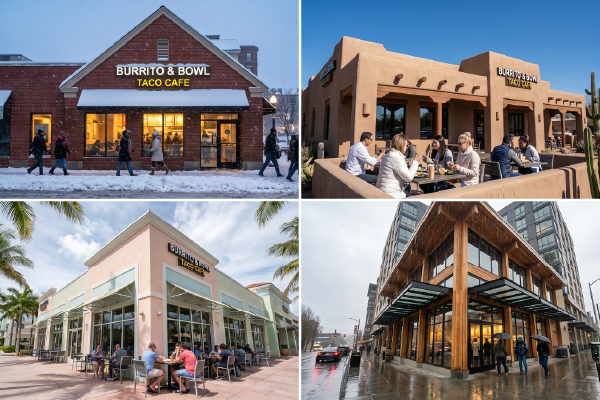
What Is Multi-Location Marketing?
Multi-location marketing is the strategy of promoting a business across multiple physical locations, markets, or service areas while balancing brand consistency with local relevance. It’s not just about running the same campaign in more places; it’s about adapting messaging, targeting, budget, and measurement to reflect the realities of each location, while still supporting broader business goals.
That distinction matters.
A business with one location might be able to find success focusing on a single audience, a single competitive set, and a single local market. However, a business with five, 50, or 500 locations doesn’t have that luxury.
Even under the same brand, locations can have wildly different marketing needs. Factors like demographics, seasonal behavior, weather patterns, economic conditions, and local competitive pressure can all play a role in determining whether a location gains traction or falls behind.
Multi-location marketing exists to help businesses not only manage that complexity, but have it inform every campaign.
What Is a Multi-Location Business?
A multi-location business is any company or organization that operates in more than one physical location, market, or service area. That can include storefronts, branches, offices, campuses, facilities, or distributed service territories. Some are national brands with hundreds of locations. Others are regional businesses expanding into new markets.

While this might immediately bring to mind restaurant chains or retail stores, the category is much broader than that. Practically any industry, brand, and product can be multi-location:
- An HVAC company with multiple dispatch centers serving customers across a 20-mile radius in different DMAs
- A tutoring company with learning centers in a handful of suburbs, each drawing from different school districts and family demographics
- A self-storage company with facilities across multiple neighborhoods within the same city, where occupancy trends, competition, and demand can vary sharply by location
What connects these businesses is not just the number of locations they operate, but the need to build visibility, generate demand, and measure performance across multiple local markets at once.
The Fundamental Challenge of Multi-Location Marketing
The central challenge of multi-location marketing is straightforward: every location belongs to the same brand, but not every location operates in the same market reality.
Let’s take a regional coffee chain, for example. One location in a downtown corridor may depend on weekday commuter traffic and fast morning transactions. Another in a suburban neighborhood may rely on weekend visits, repeat local customers, or afternoon family traffic. The same brand is still operating in both places – even selling the exact same products – but the local conditions are vastly different.

The same logic applies across categories. A national tire brand might begin advertising snow tires in September for its Minnesota locations, but wait until November to run those ads for a store in Pennsylvania.
A hotel group may see completely different demand cycles depending on whether a property serves business travelers, event traffic, or seasonal tourism.
This is why one-size-fits-all marketing often breaks down as businesses expand. A broad campaign may create reach, but it can also flatten performance if it ignores what is actually happening around each location.
The more locations a business operates, the more important it becomes to support each market with the right mix of targeting, messaging, media, and measurement.
Multi-Location Marketing, Done Right
Effective multi-location marketing is not about treating every location as if it were a separate brand. It’s also not about forcing every market into the exact same campaign structure. The strongest strategies do both at once: they keep the larger brand connected while giving each location the support it actually needs.
In practice, that means building a centralized strategy with room for local flexibility:
- Messaging must stay on-brand, but also reflect what matters in each market.
- Targeting should account for the audience around each location, not broad national assumptions.
- Investment should follow location-level opportunity and performance, rather than being spread evenly without context.
- Reporting should demonstrate performance market by market, so that teams can optimize based on localized results, not guesswork.
For marketers trying to build that kind of strategy, a strong framework is essential. Simpli.fi’s Multi-Location Playbook breaks down how brands can approach localized execution, centralized oversight, and performance across every market they serve.
Early Growth Calls for Local Precision
For businesses in the earlier stages of their expansion, multi-location marketing often starts as a visibility problem: brand awareness rarely precedes the opening of new locations.
The key challenge then becomes building this awareness in new markets without losing control of the larger brand. At this stage, the challenge isn’t enterprise complexity; it’s building a strong foundation before that complexity compounds.
Each new location needs to establish a local presence quickly and efficiently. Precision audience targeting is absolutely essential: a growing business may not have the budget to waste on broad, unfocused reach, particularly when trying to introduce a new footprint, support a new service area, or attract nearby consumers with immediate relevance.
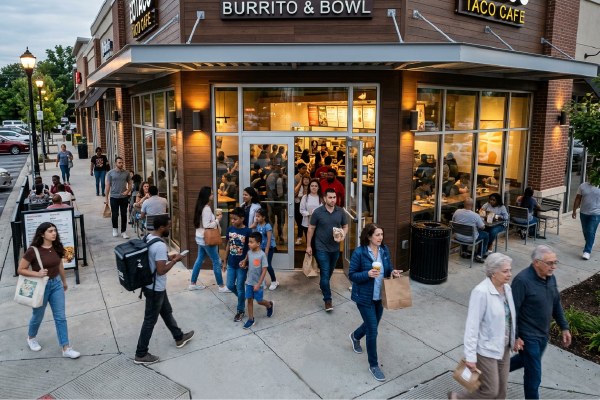
This is where hyper-localized tools like Addressable Geo-Fencing shine. Addressable Geo-Fencing reaches specific households based on precise demographics, economic indicators, consumer behaviors, and more.
This can also be applied to CTV-based advertising that helps brands build in-market awareness through premium streaming environments, while omnichannel solutions such as Social and Google SEM capture demand as consumers search, browse, and compare options in-market.
Scalable growth is the goal here: reaching the right audiences around each location, understanding which markets are gaining traction, and putting systems in place that can scale as the footprint grows.
At Scale, Market Differences Matter More
For larger, more established multi-location businesses, the focus often shifts. The challenge is no longer just building local visibility: it’s understanding how performance varies across markets, how consumers move across channels before converting, and where different locations need different kinds of support.
At that stage, visibility becomes critical. Reliable cross-device attribution connects how consumers move across screens and touchpoints before converting. Robust reporting and analytics give clearer visibility into location-level performance, allowing brands to identify which markets, audiences, and tactics are driving results. Localized CTV advertising scales premium reach while tailoring campaigns to ZIP-level, household-level, or audience-level goals. Meanwhile, Digital Out-of-Home and Audio Advertising can extend visibility beyond traditional screens, helping brands reach local audiences in the environments they move through every day.
Build a Smarter Multi-Location Strategy
Multi-location marketing isn’t just a bigger version of local marketing; it’s a different challenge altogether. As businesses expand across storefronts, branches, offices, and service areas, they need a strategy that can support local relevance without sacrificing brand consistency, visibility, or performance.
For brands trying to connect those moving pieces, check out our Multi-Location Playbook. It explores how to approach local relevance, centralized control, and location-level performance as your footprint grows.
Ready to talk through what an effective multi-location strategy could do for your business? Reach out to us at hi@simpli.fi.
 | Weston Wheeler
Sr. Content Marketing Manager | Simpli.fi Weston Wheeler is a strategic content marketing leader with roots in educational leadership and creative writing, fields that continue to shape his thoughtful, narrative-driven approach to brand storytelling. As Senior Manager of Content Marketing at Simpli.fi, he blends analytical insight with creative execution to craft compelling content that resonates across channels. With deep experience in digital advertising and a track record of success partnering with global agencies and brands, Weston endeavors to bring precision, empathy, and innovation to every project. |
FAQ’s: Multi-Location Marketing
Multi-location marketing is the strategy of promoting a business across multiple physical locations, markets, or service areas while balancing brand consistency with local relevance. Instead of running the same campaign everywhere, it adjusts messaging, targeting, budget, and measurement based on what each location needs.
A multi-location business is any company or organization that operates in more than one physical location, market, or service area. That includes obvious examples like restaurant chains and retailers, but it also includes businesses like HVAC companies with multiple service hubs, tutoring brands with several learning centers, and self-storage companies with facilities in different neighborhoods.
Multi-location marketing matters because every location operates under different local conditions. Audience behavior, competition, seasonality, weather, and economic factors can all shape how a location performs, so businesses need a strategy that reflects those differences instead of relying on one-size-fits-all campaigns.
Local marketing usually focuses on one business location or one service area. Multi-location marketing manages many local markets at once, which means brands have to maintain consistency at the brand level while adapting strategy, spend, and messaging by location.
Businesses in retail, restaurants, automotive, healthcare, home services, hospitality, education, and financial services often need multi-location marketing. Any business operating across multiple locations or service areas faces the same core challenge: reaching local audiences without losing control of the larger brand strategy.