
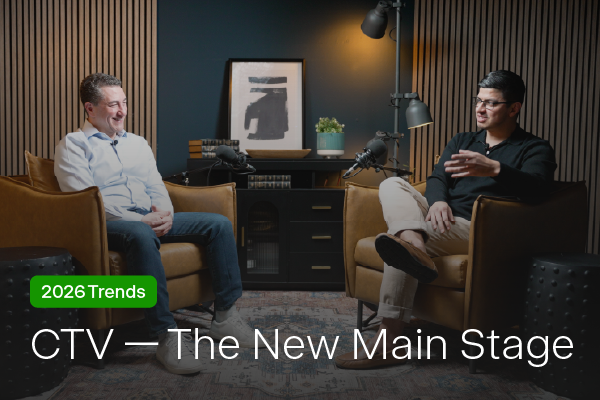
2026 Trends With CPTO Michael Schoen: CTV– The New Main Stage
In part two of a three-part series, Simpli.fi’s Chief Product & Technology Officer breaks down CTV’s evolution into a local reach replacement, plus the place to view key sports events.
Writer: Weston Wheeler
Date: January 22, 2026
2026 will be a defining year for marketers and brands as multiple seismic shifts are upending the digital advertising landscape at the same time. Streaming is rewriting what “TV” means, not to mention how it’s delivered. AI is changing how consumers discover and evaluate brands (often before they ever visit a website). Political and advocacy budgets are ramping up for a raucous political season. And across it all, one expectation keeps climbing: marketing has to feel locally relevant—market by market, neighborhood by neighborhood.
We’re exploring these trends in a three-part 2026 Trends series, inspired by conversations with Simpli.fi’s Chief Product & Technology Officer, Michael Schoen. If you missed Part 1, check out the link below. Each post leans into the major shifts that will impact marketers this year.

- Part 1: Local Reach, Reimagined — how brands win one market at a time
- Part 2: CTV: The New Main Stage — streaming as local reach, plus the organized chaos of sports
- Part 3: Politics and Omnichannel: The Pressure Test Year — the push to unify advertising channels coincides with a massive political year
In this second installment, we focus on why CTV is becoming “local broadcast, upgraded”—delivering the same sight-and-sound impact marketers expect from TV, but with far more precision and measurability. We’ll also look at why sports on streaming is the most visible pressure test of this shift in 2026, as premium appointment viewing fragments across platforms and advertisers need cross-publisher access, smarter audience strategy, and outcome-based measurement.
“CTV’s becoming the new local broadcast. It’s so much more precise, driving better business outcomes, and is more measurable.” – Michael Schoen Chief Product and Technology Officer, Simpli.fi
CTV: THE NEW (UPGRADED) LOCAL BROADCAST CHANNEL
Broadcast TV used to be the easiest way to buy reach market by market. If you needed broad impact in Dallas, Phoenix, or Tampa, you could plan around it with a familiar playbook, then hope the results justified the spend.
In 2026, that playbook has evolved.
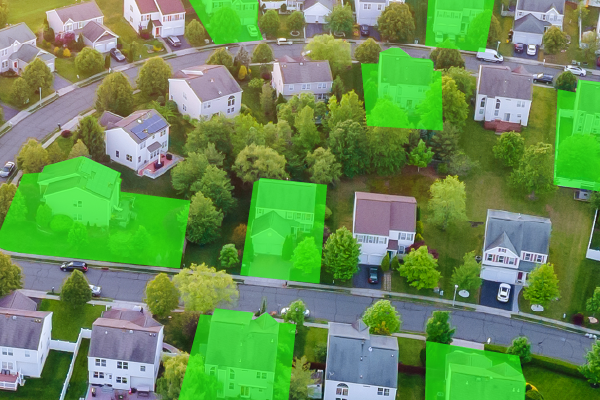
CTV is increasingly functioning as the modern replacement for local broadcast reach, but with one major difference: it doesn’t stop at the DMA. Streaming inventory can be activated with a level of household and neighborhood precision that traditional TV buying was never designed for.
That shift matters for any advertiser that needs local reach with control—especially multi-location brands managing different store priorities, service areas, and competitive realities by market.
But “new” doesn’t just mean “different.” It means upgraded:
- Buying can move beyond broad DMA-level targeting toward more precise audiences
- Reach can be scaled market by market without sacrificing precision
- Delivery can be managed more intentionally, rather than treated as a blunt-force awareness tool
Local broadcast was built for reach. CTV is being built for reach plus control.
CTV MAKES TV ADVERTISING BETTER (NOT JUST DIFFERENT)
There’s a misconception that CTV is simply “digital video on a TV screen.”
It’s not.
CTV works because it retains what made television valuable in the first place: sight, sound, motion, premium context, and viewer attention. But it improves the parts of TV advertising that marketers have been frustrated by for decades—efficiency, targeting, and measurement.
In other words, you still get the impact of television, but you don’t have to accept the inefficiencies that used to come with it.
“You get the impact of television, but in a more targeted and measurable fashion.”
That’s the shift marketers must lean in to in 2026:
- TV-grade storytelling stays intact
- Audience delivery becomes more data-driven
- Frequency and coverage can be controlled more intentionally
- Budget can be allocated with more confidence at the local market level
When CTV advertising is properly executed, it doesn’t just copy linear TV’s strengths. It amplifies them.
TV OUTCOMES THAT ARE TRULY MEASURABLE
CTV changes the value equation for TV because it enables something advertisers have wanted for years: a clearer line from exposure to outcome.

Instead of treating television as a channel you “hope” works, CTV gives marketers the ability to connect viewing to measurable business results, whether that’s ticket sales, transactions, site actions, or in-store purchases.
Whether it’s through site retargeting or addressable audiences, CTV now has the ability to act as a conversion driver– and the reporting to back it up.
“We now have the ability to look at the business outcomes and tie them to households.”
That matters because it changes how CTV is justified and optimized:
- Campaigns can be evaluated based on measurable outcomes, not just reach and delivery
- Planning can be refined market by market based on performance signals
- Confidence improves when attribution is clearer at the household level
For marketers under budget scrutiny in 2026, this is huge. It means TV can finally behave like the rest of performance media—without losing its powerful impact.
SPORTS ON CTV: ORGANIZED CHAOS IS THE NEW NORMAL
If you want to understand why CTV is a pressure test in 2026, look at the state of sports broadcasting.
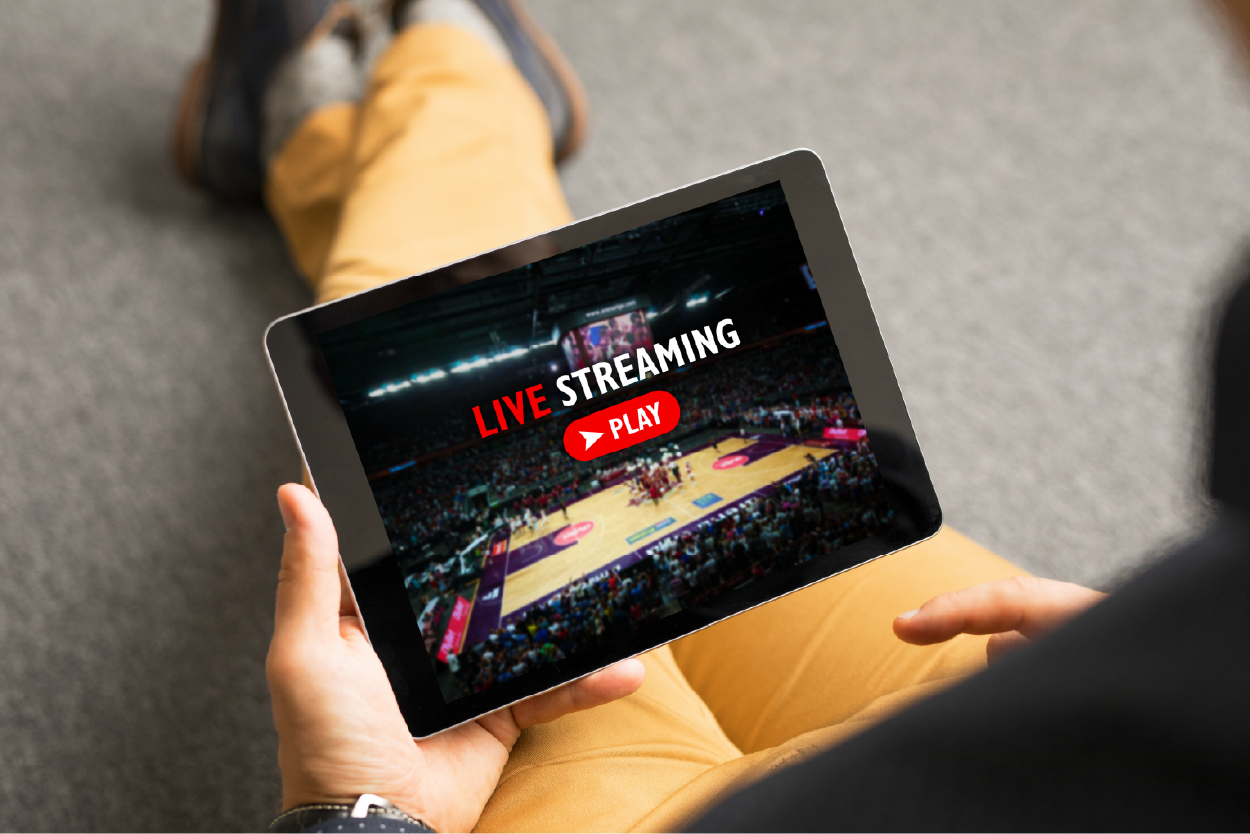
Sports still delivers what brands love: appointment-based viewing, cultural relevance, premium attention, and the kind of scale that can make waves.
But the experience of accessing that reach is changing. Rights and audiences are now distributed across multiple streaming platforms, which means the old model—buying a “broadcast sports package” or the big game and calling it a day—doesn’t cover you anymore.
In 2026, sports advertising on CTV becomes organized chaos:
- Viewers follow games across platforms depending on the league, matchup, and rights holder
- Inventory access is fragmented, even when the audience itself is not
- Planning requires cross-platform reach, not single-platform bets
The opportunity is massive—but the operational requirements are higher. Sports on CTV forces advertisers to level up their approach to access, audience strategy, and measurement.
In 2026, you don’t just need sports inventory; you need a partner that can navigate it. As rights spread across platforms, the advantage goes to marketers who can access the right audiences across all of these channels and reach viewers wherever they’re watching. Done right, this fragmentation becomes a positive differentiator: more ways to buy, more control over who you reach, and more precision around the moments that matter.
SPORTS TARGETING GETS SHARPER THAN EVER
As sports on streaming brings chaos, it also creates a powerful advantage: more control over exactly who you reach. The real unlock in 2026 isn’t just “advertise around a game.” It’s the ability to go beyond broad contextual adjacency and reach specific households watching those premium moments—then layer in the geographic precision that local advertisers need.
That’s where sports on CTV becomes more than a branding play. It becomes a strategic reach-and-performance opportunity:
- Reach households watching sports content, not just “sports fans” in the abstract
- Combine premium moments with service-area precision for multi-location and local advertisers
- Improve efficiency by focusing spend where it can realistically drive outcomes
For a regional brand, a multi-location advertiser, or an agency planning local market coverage, that’s the upgrade: you’re not buying “sports reach” as a blunt instrument. You’re buying premium attention with precision and measurable intent.
THE 2026 TAKEAWAY
CTV is becoming the new local broadcast channel—upgraded. It keeps the impact of traditional television, but brings household- and service-area precision, cross-publisher access, and measurable outcomes into the equation.
And sports makes the shift impossible to ignore.
In 2026, the advertisers who win on CTV will:
- Treat streaming as a core local reach channel, not a test budget
- Plan beyond DMA-level buying toward service-area audiences
- Build audiences across premium publishers instead of operating in silos
- Tie household exposure to real business outcomes with stronger measurement
- Navigate sports fragmentation with cross-platform access and sharper targeting
Want the full story behind these shifts? Watch the 2026 trends interview with CPTO Michael Schoen—and explore how Simpli.fi helps advertisers activate and measure CTV campaigns across premium streaming inventory.
Up next in the series: Politics and Omnichannel: The Pressure Test Year. Learn how the upcoming political season is shaping up and why truly unified execution becomes non-negotiable in 2026.
 | Weston Wheeler
Sr. Content Marketing Manager | Simpli.fi Weston Wheeler is a strategic content marketing leader with roots in educational leadership and creative writing, fields that continue to shape his thoughtful, narrative-driven approach to brand storytelling. As Senior Manager of Content Marketing at Simpli.fi, he blends analytical insight with creative execution to craft compelling content that resonates across channels. With deep experience in digital advertising and a track record of success partnering with global agencies and brands, Weston endeavors to bring precision, empathy, and innovation to every project. |
Relevant Resources