
How Modern Marketers Reach Local Markets With Geo-Location
Learn How Today’s Brands Use Geo-Location to Drive Local Market Performance
Writer: Luis Reyes
Date: November 25, 2025
As marketers we are always hearing about the latest and greatest solution—what makes it faster, smarter, or better suited for the challenges we face today. Having lots of options is a good thing but can be a bit overwhelming. Modern marketers are constantly evaluating new tools, new ideas, and new ways to create clarity in a landscape that evolves daily.
The real challenge isn’t a lack of options; it’s knowing which approaches actually make a difference when the goal is reaching real customers in real places.
That’s where geo-location stands apart. Not as a minor feature, but as a critical way to understand and engage audiences at the building, neighborhood, or household level.
Today’s marketers aren’t just looking to “target an area.” They’re looking for accuracy, granularity, and confidence, especially when activating across multiple cities, regions, or storefronts. And with Simpli.fi’s geo-location capabilities, brands can do exactly that, turning physical movement into measurable outcomes at scale.
What follows is a modern marketer’s guide to how geo-location works, how multi-location brands put it into practice, and how Simpli.fi helps transform local market opportunities into real performance.
1. GEO-FENCING: REAL-WORLD PRECISION AT SCALE
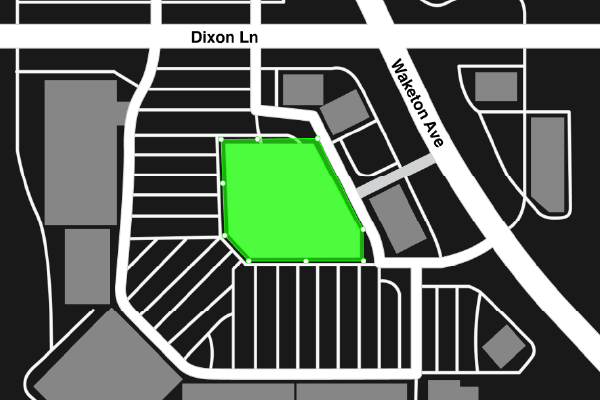
Geo-Fencing remains one of the most effective ways to target users based on their physical movement through the world.
Simpli.fi’s geo-fence technology allows marketers to draw exact custom shapes, down to highways, school districts, building perimeters, or competing storefronts. These shapes are powered by accurate, real-time location data captured at the latitude–longitude level (not inferred ranges or grid-based approximations).
What Makes Simpli.fi Geo-Fencing More Precise?
- Custom shapes of any size or complexity
- Bulk GeoJSON upload for large-scale targeting (districts, counties, territories)
- Device matching that pairs users 1:1 to zones they physically enter
- Recency controls—from instant detection to 30-day windows
- Localization that avoids grid-based inaccuracies
- Scalable location data across ~600,000 apps
Key Capabilities for Marketers
- Retarget customers who visit or pass through any geo-fenced location
- Target consumers within a defined proximity of a store
- Reach users attending events during exact date/time windows
- Track offline, “last-mile” conversions to measure real-world visits
- Build hyperlocal, shape-based audiences for competitive conquesting
This is the foundation for reaching local markets – not broad DMA-level assumptions, but precise targeting rooted in where people actually go.
2. CONFIGURABLE GEO-SPATIAL TARGETING
For campaigns that demand more flexibility or dynamic shapes, Simpli.fi’s configurable geo-spatial tools automatically generate targeting zones that adjust by distance, shape, radius, or custom logic.
This provides:
- Pinpoint accuracy for granular neighborhoods
- Consistent scalability across hundreds of locations
- Improved mobile performance in local markets
- Import/export support for organization-wide shape management
Every zone is dynamic, customizable, and designed for true geo-intelligence—not generalized overlays.
3. CONVERSION ZONES: TURNING MOBILE ADS INTO REAL-WORLD FOOT TRAFFIC
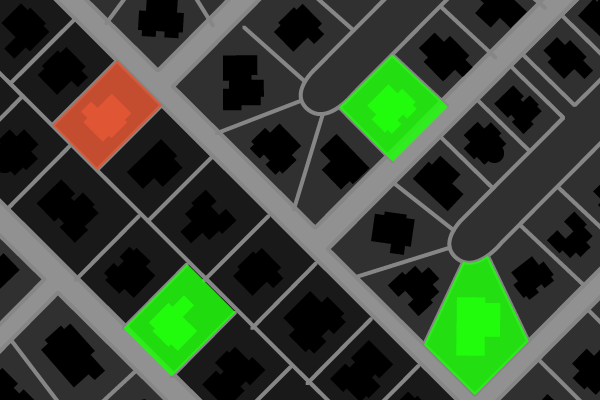
Conversion Zones give marketers clear visibility into who visited a store after being served an ad.
They operate by layering:
- A geo-fence around targeted competitor or interest-based locations
- A Conversion Zone around the marketer’s own storefront
When a user who was served an ad then enters the Conversion Zone, the visit is attributed as an offline conversion tied to a campaign.
Why This Matters
- You can measure real in-store visits, not just clicks
- You have visibility into daily visit behavior across targeted audiences
- You avoid expensive holdout sets via Simpli.fi’s Natural Conversion Rate baseline
- You gain statistically rigorous lift metrics without added spend
This is one of the most powerful tools for multi-location brands aiming to understand what drives real-world outcomes across local markets.
4. EVENT TARGETING: REACHING HIGH-INTENT AUDIENCES IN THE MOMENT

Event Targeting lets marketers build audiences from users who were physically present at specific events during defined time windows—down to the hour.
Ideal for:
- Conferences, trade shows, and conventions
- Sporting events across major college, professional, and national competitions.
- Concerts, tours, festivals, and fairs
- Venues like arenas, convention centers, theaters, and stadiums
Simpli.fi automatically builds audiences during the event timeframe and allows advertisers to reach them for up to 30 days afterward—perfect for B2B, retail, tourism, education, and entertainment brands.
5. ADDRESSABLE GEO-FENCING: HOUSEHOLD-LEVEL ACCURACY
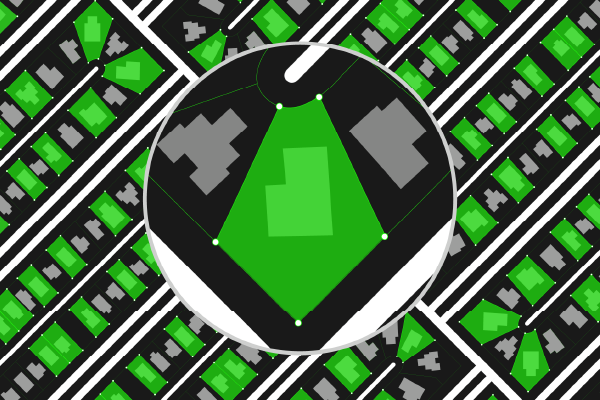
Addressable Geo-Fencing takes geo-location to its highest precision: the household.
This is not IP-based guessing or modeled grids. Each address is mapped using plat line data from property records, then turned into an exact geo-fence.
Marketers can upload up to 1 million addresses—or let Simpli.fi curate them using more than 3,000 demographic and behavioral variables.
Why Addressable Matters for Local Market Success
- Higher match accuracy than IP-based approaches
- Privacy-safe targeting with PII-scrubbing
- ZIP+4-level reporting for household performance
- Cross-device retargeting across CTV, mobile, desktop, and tablet
- Ideal for CRM-based campaigns, retention audiences, and multi-location targeting
- Daily audience refresh ensures recency and accuracy
This is how modern marketers reach specific customers—not just areas.
6. GEO-TARGETING IN ACTION
One reason geo-location continues to grow in importance is simple: it works wherever real people go. Whether a brand is driving in-store sales, engaging event attendees, or connecting with households in specific neighborhoods, location data creates a clearer, more accurate path to the customer.
Below are some of the most impactful ways marketers activate local markets and measure performance.
Brick-and-Mortar Brands
Geo-location is especially valuable when customers are already physically close to your business. Auto dealers use geo-fencing to conquest nearby competitors. QSR restaurants reach lunchtime visitors to boost same-day sales. Retailers identify high-intent shoppers as they leave nearby malls. Hotels target travelers moving through airports and convention centers. Insurance agents identify neighborhoods affected by storms or local events.
Venue-Based Targeting
Some of the richest local audiences gather in the same place at the same time. Stadiums, convention centers, concert halls, and college campuses provide hyper-relevant opportunities to reach fans, students, attendees, or niche groups. A merch brand might reach game-goers; a B2B advertiser might target conference attendees; a streaming service might reconnect with music fans after a concert.
District-Level Strategies
Campaigns that require strict boundary accuracy—political outreach, municipal messaging, localized initiatives—benefit from precision. District-based targeting ensures advertisers reach the right residents while avoiding spillover into irrelevant neighborhoods.
Travel & Transit Audiences
Airports, rental car lots, and transit hubs produce predictable movement patterns from travelers and commuters. Travel brands, rideshare companies, hotels, insurance providers, and auto services all use these signals to reach high-value audiences at the right moment.
Lifestyle & Category-Based Audiences
Everyday behavior leaves location footprints. Grocery shoppers, mall visitors, DIYers at hardware stores, and outdoor enthusiasts at trails or sporting goods shops each represent distinct, actionable segments. A CPG brand may target shoppers leaving a grocery store. A home improvement retailer might reach weekend DIYers. Sports and outdoor brands can personalize ads for golfers, skiers, or adventurers based on where they visit.
No matter the category, the value remains the same: geo-location turns real-world movement into real marketing outcomes, giving brands clarity about who they’re reaching, where those audiences go, and what actions drive measurable lift across every local market they serve.
7. CASE STUDY: A NATIONAL FURNITURE BRAND REACHES LOCAL SHOPPERS USING ADDRESSABLE + CTV

To see how geo-location transforms real-world business outcomes, consider this multi-location furniture retailer competing in the $239B U.S. market.
The Challenge
The brand needed to drive in-store visits across 60+ locations in 17 states, targeting consumers actively considering furniture purchases.
The Simpli.fi Approach
We deployed a unified strategy that truly moved the needle:
- Addressable Audience Curation
Built a custom audience using location data and 3,000+ demographic variables—including movers, home furnishings intenders, and adults 25+ near relevant store ZIP codes. - Addressable Geo-Fencing
Mapped and fenced 1.9 million households using plat-line accuracy. - CTV + Display Activation
Served CTV ads across large and small screens alongside complementary display inventory. - Conversion Zones
Tracked offline visits across 67 stores to measure in-person conversions after ad exposure.
The Results

With 1,542 verified in-store visits, a 98.1% Video Completion Rate (well above the 95% goal), resulting in measurable lift across multiple states and store footprints, this campaign demonstrates exactly what becomes possible when precise geo-location meets strong creative and thoughtful distribution.
When accuracy meets relevance, local markets don’t just engage – they convert.
PRECISION WINS LOCAL MARKETS
Geo-location is the bridge that turns physical movement into measurable outcomes, giving brands the power to:
- Target customers with unmatched precision
- Activate across multiple locations with confidence
- Measure real visits and real business impact
- Scale campaigns across states, markets, and audiences
- Reach the right people at the right address, event, or location
Simpli.fi doesn’t just claim accuracy. It proves it across millions of households, thousands of locations, and every local market where your customers live, shop, and decide.
And for modern marketers, that precision isn’t an extra—it’s the advantage.
Ready to strengthen your local market strategy? Request a personalized demo and see how precision geo-location can drive real performance across every location you serve.
 | Luis Reyes
Sr. Manager of Content Marketing | Simpli.fi Luis Reyes is a dynamic leader in content marketing, recognized for strategically elevating brand presence and driving impactful results. As the Senior Manager of Content Marketing at Simpli.fi, he leverages extensive expertise gained from previous roles, including Senior Client Success Manager for national advertising agencies and enterprise clients, Marketing Content Creator at a leading healthcare services provider, focusing on brand mergers and project management, and Sales Account Manager at a prominent digital marketing firm, where he secured and managed national and regional digital marketing campaigns along with creative work. His diverse experience and forward-focused approach solidify his status as an authority in today’s competitive marketing landscape. |
Relevant Resources