What Is a Sales Funnel?
A guide to the stages, process, and purpose of a sales funnel.
Writer: Luis Reyes
Date: December 29, 2025
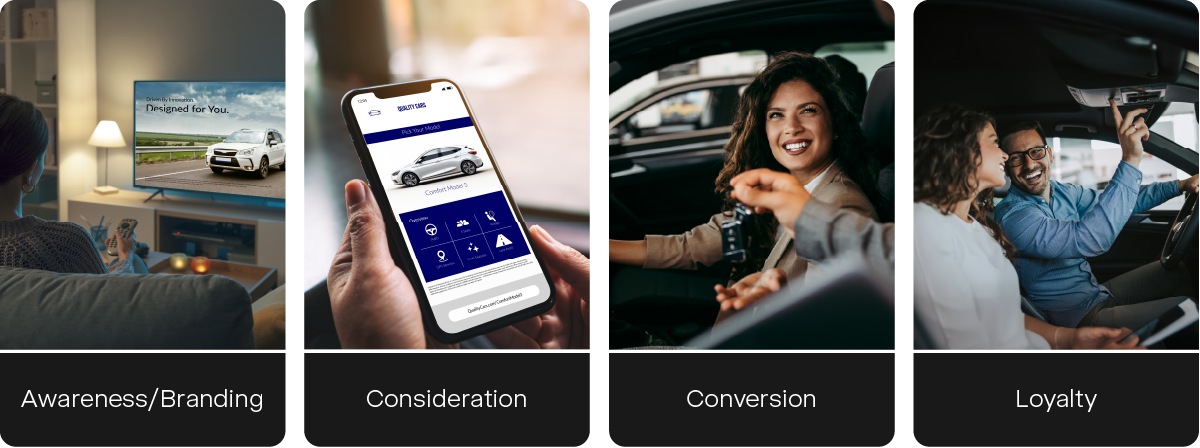
A sales funnel is a structured framework that outlines how potential customers move from initial awareness to final purchase. It helps businesses visualize and optimize the steps buyers take before making a decision, starting with broad interest and narrowing toward conversion.
This process is often divided into stages, each representing a key moment in the buyer journey. The funnel shape reflects how audiences decrease in number but increase in intent as they move closer to a decision.
Marketers and sales teams use sales funnels to guide strategy, messaging, and media investment at every stage.

WHY SALES FUNNELS MATTER TO MARKETERS AND MEDIA BUYERS
A well-defined sales funnel gives businesses clarity on how to engage prospects at the right time with the right message. It aligns marketing and sales teams, improves forecasting, and helps allocate resources more efficiently, especially when tied to full-funnel advertising strategies.
For advertisers, sales funnels ensure campaigns are anchored to real outcomes. They also help teams adjust creative and messaging based on where a customer is in the buying process. Understanding buyer intent is key here, and aligning that with each funnel stage is critical to driving stronger performance. For a deeper look at this, see Simpli.fi’s approach to aligning strategy with buyer intent.
UNDERSTANDING THE STAGES OF A SALES FUNNEL
A typical sales funnel is made up of several strategic steps that move a prospect from awareness to conversion. Each stage plays a different role in guiding the buyer journey, and understanding these sales funnel processes and steps is key to improving performance, alignment, and messaging across your campaigns.
| Stage | Purpose | Tactics | Success Metrics |
|---|---|---|---|
| Top of Funnel (TOFU) Awareness | Capture attention and introduce your brand to new audiences | Display ads, CTV, video, location-based creative | Impressions, reach, video views |
| Middle of Funnel (MOFU) Consideration | Educate, nurture interest, and differentiate from competitors | Retargeting, contextual targeting, case studies | CTR, time on site, leads generated |
| Bottom of Funnel (BOFU) Conversion | Drive final actions and purchase decisions/td> | Addressable targeting, dynamic creative, Conversion Zones | Conversions, ROAS, store visits |
Here’s how those stages usually break down in more detail:
1. Top of Funnel (TOFU): Awareness
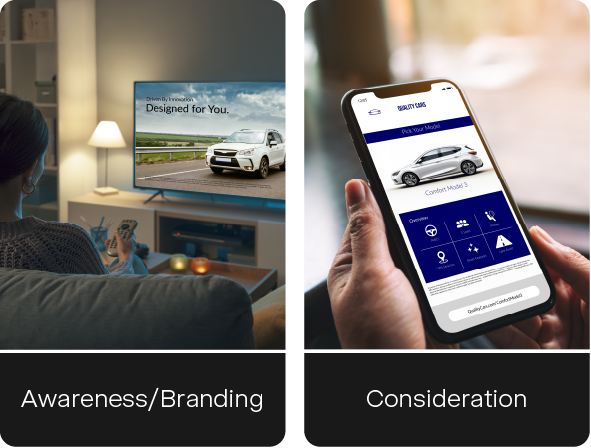
At the awareness stage, the goal is simple: get noticed. You’re speaking to audiences who may not know your brand exists, so the focus should be on delivering value instead of a hard sell. That might mean surfacing a problem, sharing insight, or offering content that introduces your brand as relevant.
For advertisers, this is where wide-reaching tactics come into play. It’s about building familiarity and establishing credibility, while ensuring your message reaches the right audience.
What this looks like in action:
- Use display and video ads to introduce your solution to a broad but qualified audience
- Deliver location-based creative to match local context or regional demand
- Focus on high-reach placements like CTV or streaming TV to build brand presence at scale
Success is measured by:
- Impressions
- Reach
- Video views
- Engagement rate
Want help designing awareness strategies that drive downstream results? Explore full-funnel campaign tactics.
2. Middle of Funnel (MOFU): Consideration
Now your audience is aware of your brand and possibly others. The goal here is to educate, differentiate, and nurture. You’re helping buyers evaluate their options and understand why your solution is the right fit.
At this stage, personalization and retargeting become essential. By adapting creative and messaging based on previous engagement, marketers can stay relevant and build trust.
What this looks like in action:
- Use retargeting and contextual advertising to stay visible during research
- Reinforce brand value with case studies or customer stories
- Test variations in creative based on user behavior or funnel stage
Success is measured by:
- Click-through rates (CTR)
- Site engagement
- Leads generated
Need help moving users from awareness to intent? Simpli.fi supports advanced sequential messaging strategies that adapt your ads in real time.
Bottom of Funnel (BOFU): Conversion
This is the decision stage where action happens. Your audience is familiar with your offering and ready to convert, but they may still need reassurance or a final push.
Here, messaging should be benefit-driven, time-sensitive, and focused on value. You’re not just reinforcing your offer, but personalizing the messaging to make it easy to say yes.
What this looks like in action:
- Deliver addressable ads to specific households or business locations
- Use custom offers or dynamic creative to drive urgency
- Track real-world results with conversion zones or visit attribution
Success is measured by:
- Conversions
- Purchase rate
- Store visits
- ROAS
Simpli.fi helps advertisers deliver at this stage with precision targeting and real-time reporting, ensuring that every conversion opportunity is measurable and actionable.
One regional entertainment brand used these tactics to boost season pass sales and drive over 1,100 store visits. Read the case study.
SALES FUNNEL VS. MARKETING FUNNEL: WHAT’S THE DIFFERENCE AND WHY IT MATTERS
While often used interchangeably, these two concepts play distinct roles.
- The marketing funnel focuses on brand awareness and early engagement—before a prospect enters the sales conversation.
- The sales funnel takes over as that interest becomes intent, guiding prospects toward conversion through targeted touchpoints.
These aren’t competing frameworks, and a strong media strategy integrates both, combining demand generation with precision targeting. Simpli.fi helps advertisers connect media exposure with measurable outcomes by building smarter full-funnel advertising strategies that span the entire customer journey.
WHEN TO USE A SALES FUNNEL STRATEGY
Sales funnels are especially valuable for:
- B2B and high-consideration purchases
- Multi-touch buyer journeys
- Brands with longer conversion timelines
- Campaigns that require retargeting or nurturing
- Organizations with distinct goals at each stage
Whether you’re looking to improve lead quality, better allocate budget, or strengthen brand trust, a funnel-based approach brings structure, relevance, and flexibility to your strategy.
HOW SIMPLI.FI SUPPORTS FULL-FUNNEL CAMPAIGNS
Simpli.fi enables advertisers to run hyper-targeted, full-funnel campaigns across programmatic channels: connecting strategy to real results. Whether you’re building awareness or converting high-intent leads, the platform provides tools to guide every stage.
Key features include:
- Custom audience curation for TOFU and MOFU targeting
- Addressable Geo-Fencing for BOFU engagement
- Cross-device delivery across display, mobile, CTV, and video
- Sequential Messaging to adapt creative as buyers move through stages
- Reporting and attribution tools to measure funnel performance
Simpli.fi also supports industries with long or complex funnels—like B2B, healthcare, or multi-location businesses.
Ready to Build a Smarter Funnel?
Simpli.fi gives you the tools to plan, activate, and optimize full-funnel campaigns that are customized to your business goals and your audience.
Explore our B2B media buying solutions
 | Luis Reyes
Sr. Manager of Content Marketing | Simpli.fi Luis Reyes is a dynamic leader in content marketing, recognized for strategically elevating brand presence and driving impactful results. As the Senior Manager of Content Marketing at Simpli.fi, he leverages extensive expertise gained from previous roles, including Senior Client Success Manager for national advertising agencies and enterprise clients, Marketing Content Creator at a leading healthcare services provider, focusing on brand mergers and project management, and Sales Account Manager at a prominent digital marketing firm, where he secured and managed national and regional digital marketing campaigns along with creative work. His diverse experience and forward-focused approach solidify his status as an authority in today’s competitive marketing landscape. |
Relevant Resources