
The Biggest Stage in Sports: A Multi-Location Advertiser's Guide to World Cup Audience Targeting
How to build an omnichannel sports marketing strategy that reaches fans before, during, and after every match
Writer: Luis Reyes
Date: May 28, 2026
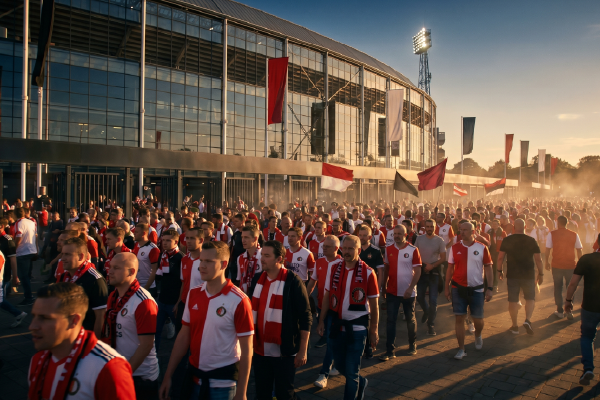
Every few years, a global sporting event occurs that traditional media planning simply cannot replicate. During major sports moments like the FIFA World Cup, audiences don’t just scale; they synchronize.
With Sports Illustrated reporting that the final match of the last tournament alone drew a staggering 1.5 billion viewers worldwide, these moments transcend standard viewership metrics. Matches become part of daily routines; conversations migrate seamlessly from the big screen to group chats, social feeds, and local workplaces. For multi-location media buyers, the upcoming 2026 FIFA World Cup isn’t just a traffic spike. It’s a massive, coordinated shift in consumer behavior that demands a sophisticated, omnichannel approach.
WHAT IS MULTI-LOCATION ADVERTISING?
Multi-location advertising is a localized marketing strategy that allows brands with multiple physical footprints, franchises, or regional markets to launch unified national campaigns while tailoring the messaging, offers, and budgets to specific local audiences.
Unlike traditional broad-market advertising, multi-location advertising ensures that a brand remains highly relevant at the neighborhood level without sacrificing the scale of a major national initiative.
Why Multi-Location Targeting Wins During Global Sports Events
During a massive tournament like the World Cup, consumer behavior shifts rapidly depending on geography, timezone, and local team allegiance. Multi-location advertising allows media buyers to capitalize on this by:
- Localizing Relevance: Serving a promotion for a viewing party in Chicago that differs from an offer sent to fans in Miami, based on local match schedules and demographics.
- Dynamic Budgeting: Shifting programmatic ad spend in real-time to regions experiencing the highest engagement or foot traffic during a match.
- Geo-Fencing Fan Hubs: Serving hyper-local mobile and CTV ads to fans gathered at specific stadiums, sports bars, or public viewing squares.
THE OMNICHANNEL MATCH-DAY EXPERIENCE
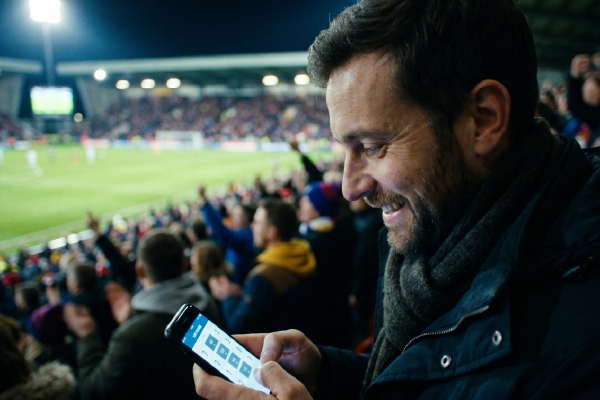
The single-screen era is over. These days, match-day is a multi-device journey. A viewer might start on streaming TV, check real-time stats on their mobile device, and revisit expert analysis later via Programmatic Audio or podcasts.
For media buyers and marketers managing multiple regions, continuity is the differentiator. Maintaining a consistent signal across these touchpoints turns fragmented impressions into a cohesive brand story, and that cohesion is what separates brands that are barely noticed from brands that are truly remembered.
ALIGNING WITH ATTENTION, NOT JUST INVENTORY
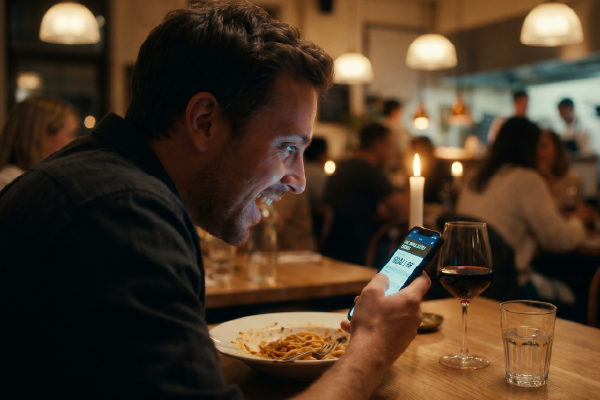
It’s easy to treat sporting events as a simple inventory grab. High-volume impressions, however, these don’t always equal high-quality attention.
During the World Cup, fan attention expands across:
- Streaming Environments: CTV and Streaming TV platforms where fans follow match coverage and analysis
- Second-Screen Activity: Sports apps, social media, and live score platforms
- Local Context: Real-world movement around sports bars, stadiums, and fan zones — precisely where Geo-Fencing and Event Targeting deliver their strongest results.
Successful sports marketing campaigns follow the flow of attention: building anticipation before kickoff, reinforcing the message during active engagement, and staying present as post-game momentum carries forward. That last phase, post-event targeting, is where many brands underinvest, and where the most cost-efficient audience engagement often lives.
POST-EVENT RETARGETING: THE UNDERUTILIZED OPPORTUNITY IN SPORTS MARKETING
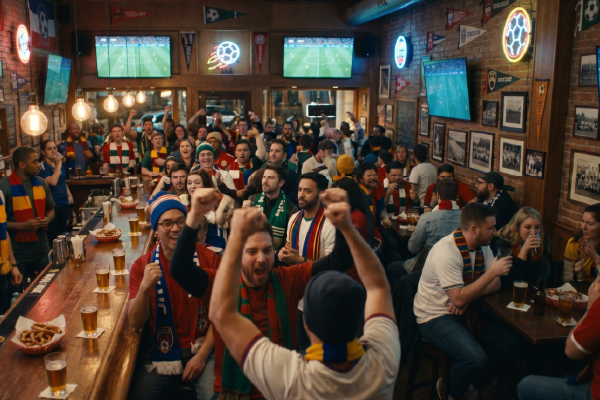
Most sports advertising strategies are built around the event window itself. But the conversation doesn’t end when the match does and neither should your campaign.
Post-event retargeting allows advertisers to continue reaching audiences for up to 30 days after they leave a geo-fenced location or event area. For World Cup markets, that means a fan who spent match day at a sports bar in Dallas or a fan zone in Los Angeles can continue receiving relevant messaging days later, wherever they are.
As explored in World Cup to Comic-Con: A Geo-Fencing Strategy for Summer’s Biggest Events, the extended audience journey is one of the most valuable and most overlooked dimensions of location-based sports advertising. Geo-Fencing and Event Targeting make it possible to stay connected across the full arc of the fan experience, not just the 90 minutes on the pitch.
BUILDING BEYOND THE EVENT WINDOW
While the tournament acts as a focal point, the surrounding engagement tells a broader story. Fan interest builds well before the opening match and carries through highlights, analysis, and ongoing conversation long after the final whistle.
For brands with a physical footprint, sustained presence means messaging can feel genuinely connected to a consumer’s local environment by the time they’re ready to act, whether that’s visiting a store, making a purchase, or deepening their relationship with a brand they’ve seen consistently throughout the tournament.
But national reach alone doesn’t capture that moment. Audience behavior shifts market by market as a major event unfolds and the brands best positioned to win are the ones executing with precision at the local level:
- Tailored creative by city and region aligns messaging with real-time audience behavior rather than a single national pulse.
- Localized media buying helps optimize against regional demand and consumer movement patterns.
- Omnichannel strategies extend impact before, during, and after key tournament moments, not just the marquee matches.
- Market-level personalization at scale turns national campaigns into locally relevant ones that actually drive action.
Executing that kind of granular strategy requires more than good timing. It requires the technical flexibility to manage local nuance across host cities, surrounding markets, and the audiences moving through all of them.
WHERE SIMPLI.FI FITS: A MULTI-LOCATION ADVERTISING SUCCESS STORY

Supporting campaigns around moments like the World Cup depends on the ability to move with the audience.
Simpli.fi enables advertisers to solve local marketing challenges by activating across Streaming TV, Programmatic Audio, Mobile, and Geo-Fencing, while maintaining consistency and measurability across every location.
To see this in action, consider how a multi-location grocery retailer used these exact tactics to drive measurable, store-level results:
A grocery retailer partnered with Simpli.fi to increase in-store visits and gain clearer visibility into how digital ads influenced sales. By leveraging Geo-Fencing to conquest competitor locations and Addressable Geo-Fencing to reach high-intent households, they achieved:
- 30,922 In-Person Visits: Driven through precise location-based targeting
- $4.38 Cost Per Visit (CPV): Performing 2x better than their $10 goal
- 20% Revenue Lift: Simpli.fi’s cross-device attribution identified over 600 additional household-level conversions that device-only tracking would have missed
- $584,921 Total Revenue: Generated over a three-month campaign by optimizing spend at the store level
The focus wasn’t on forcing a message into a single moment – it was on ensuring the brand remained present and relevant as consumers moved from awareness to in-store purchase.
FROM THE WORLD CUP TO EVERY MAJOR SPORTING MOMENT
The 2026 FIFA World Cup is a blueprint for how fan attention behaves in a connected world. The strategies that work here, omnichannel execution, second-screen alignment, post-event targeting, and localized relevance apply to every sports league and cultural moment throughout the year.
The brands that win won’t be those that try to buy the event. They’ll be the ones that stay present as the audience moves through it.
Ready to build an advertising strategy around major sporting moments? Reach out to us at hi@simpli.fi to learn how localized audience targeting can help brands stay connected before, during, and after the moments audiences care about most.
 | Luis Reyes
Sr. Manager of Content Marketing | Simpli.fi Luis Reyes is a dynamic leader in content marketing, recognized for strategically elevating brand presence and driving impactful results. As the Senior Manager of Content Marketing at Simpli.fi, he leverages extensive expertise gained from previous roles, including Senior Client Success Manager for national advertising agencies and enterprise clients, Marketing Content Creator at a leading healthcare services provider, focusing on brand mergers and project management, and Sales Account Manager at a prominent digital marketing firm, where he secured and managed national and regional digital marketing campaigns along with creative work. His diverse experience and forward-focused approach solidify his status as an authority in today’s competitive marketing landscape. |